To you, who happened upon thisPlaces
Scanning my first roll myself at Gorae Sajingwan
How a few clicks turned into time and care
I wanted to know whether the repaired camera had truly come back to life, so I hurried through the first roll. Rewinding a finished roll and taking it out was new to me too, and I followed a YouTube video one step at a time, thinking this must be what people mean by the feel of analog. The little canister that came out held the whole roll, from the first shutter I pressed inside the repair shop to Mong by the window. No one had seen what was inside yet, not even me.
I had always assumed film went to a lab and came back developed and scanned. Then I heard of a place in Chungmuro where customers scan their own film, and that settled it. More than anything, I think I wanted the first eyes on this roll to be mine. I decided to stretch my lunch break a little and hurry over. Gorae Sajingwan sits between Euljiro 3-ga and Chungmuro stations, so I got off at Euljiro 3-ga on Line 2 and walked the rest of the way.
The moment I came up out of the exit, that air you only find in Euljiro rolled over me. The midday street was busy with shopkeepers and tourists, and for all its worn buildings, it was full of life.
I followed Naver Map, and just as I started looking around and wondering whether I had the right street, the Gorae Sajingwan sign caught my eye. The sign was clearly there, but the stairs I looked up at from the ground-floor entrance were narrow and dim, and I couldn't tell whether a shop on the third floor was really open. I hesitated for a while before setting foot on the first step.
Only after climbing the stairs, a whale painted along the way, did I finally relax. Everywhere I looked, the place breathed film.
Lingering outside the door for a moment, I noticed a neon sign blazing on the opposite side. Had it hung where it faced the stairs, its glow would have reached all the way down, and I wouldn't have stood hesitating on the ground floor.
Inside, props and odds and ends from the world of film greeted me first. I had heard developing takes fifteen to thirty minutes, so I checked in for self-scanning at the front desk, paid, and then wandered around the shop.
On one side was a spread of stamps for decorating the film envelopes, and above it glowed a red paper lantern that read PENTAX 17. The same lanterns hung all around the shop. It is the film camera Pentax released after a very long pause, and though it came out more than two years ago, by the clock film cameras keep it still counts among the newest. Since I would press a few on my way out anyway, I decided to take my time with them then.
The shelves were packed with film. I had thought even Kodak Gold was not cheap, only to learn it was the least expensive roll there. The pricier stocks could wait until my hands knew a little more.
Each stock came with sample prints shot on it, and from the Tri-X that appeared in You and Everything Else, to the Portra 400 I used to imitate with Lightroom edits, to Ektar 100, every one had a character all its own. Seeing the results in front of me, I began to think no Lightroom preset or iPhone filter app could carry over the feel of film as it is. Shoot the same scene side by side on a film camera and a digital one, match them frame by frame, and it might come close, but an edit made without a control group is only something imitating film, not film. I had tried countless presets and apps like that without ever getting a result I was happy with, and only after shooting real film did I feel I understood why. I had been imitating something I had never truly seen, so it could never look the same.
Across the way, a shelf was lined with film cameras.
There were all kinds of stickers too, but they weren't my taste, and I left them alone.
There was also a box full of canisters from rolls already developed, and Kodak clearly outnumbered everything else. Next spring and summer, when the green deepens, I should load some Fujifilm too.
All the while, the desk never had a quiet moment. Orders seemed to be coming in from well beyond the customers in the shop, and the staff never stopped moving.
Behind the glass beside the desk stood machines that looked like film processors. I had thought film could only be developed in a darkroom, but apparently not. Then again, it would be stranger if today's technology hadn't solved that much. My roll was probably passing through one of them right then.
The waiting area was generous, which told me it must get crowded at busy times. It was this busy on a weekday afternoon, with plenty of visitors from abroad. I imagine more and more people will find their way to places like this. The more anything can be made on a screen in an instant, the more precious the things we have to touch and wait for become.
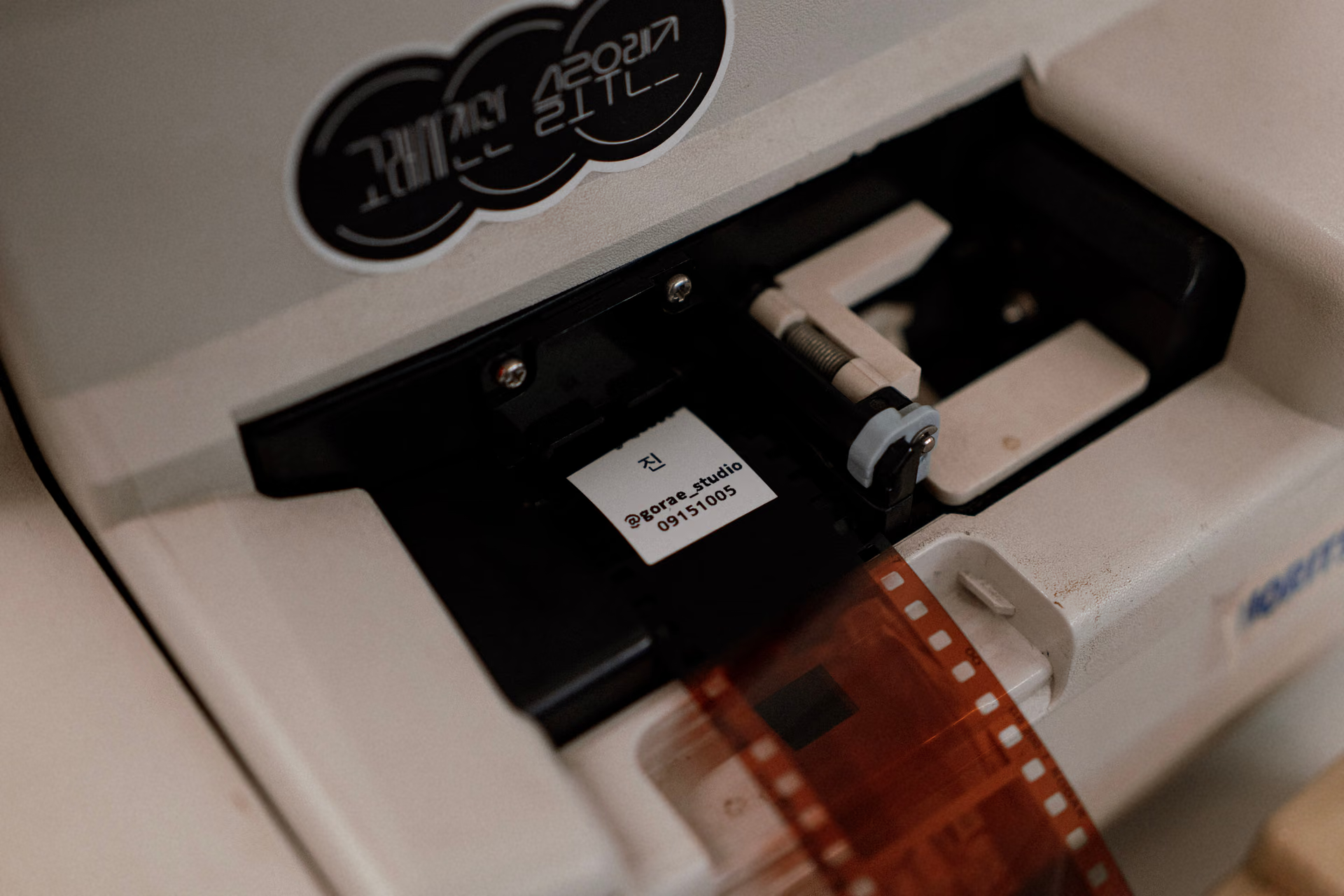
There looked to be eight to ten self-scan stations, and the scanners all seemed to be Noritsu. I had meant to pick a Noritsu anyway, so there was no need to ask.
When the developing was done, a staff member called the name I had written on my ticket. When I said it was my first time, they showed me to a station and fed the developed film straight into the scanner. The first roll in this camera had been loaded by the repair shop owner too, so once again my first step was taken with someone else's hands. The film slid smoothly into the machine.
Once the prescan finished, previews came up on the monitor. There seemed to be ways to adjust the color, but I had no room for that. All I had hoped for was a single frame that came out right, and the one of Mong came out so well that there was nothing more to look for. Maybe that was the frame I had come all this way to see before anyone else.
The scanned files are saved to a set folder on the PC, and taking them home is up to the customer. In my rush I had left my external drive behind. Email seemed too small for the whole batch, and I didn't want KakaoTalk to crush the quality, so for the time being I uploaded everything to my personal cloud. A roll I had wound and rewound by hand ended its journey in the cloud after all.
Once developed and scanned, the film is either cut and slipped into archival sleeves or rolled up and put back into a canister, and with cutting boards, sleeves and empty canisters all laid out, customers do this part themselves as well. I had no plan to cut it, but I wanted to see it against the light, so I laid it on the lightbox. Being a negative, it gave away little more than shapes. Somewhere in those small frames, the Mong I had just seen on screen lay with the colors reversed. I rolled the film up carefully and put it in a canister.
It is a place that weaves hands-on self-service and the feel of analog together with real thought. It bothered me a little that the staff's workspace wasn't set apart from the customers' seats, though for some people that may well be part of the charm. Now to go back to the stamps I had spotted on the way in and press a few before I leave.
I gathered the photos I scanned that day into a single roll.
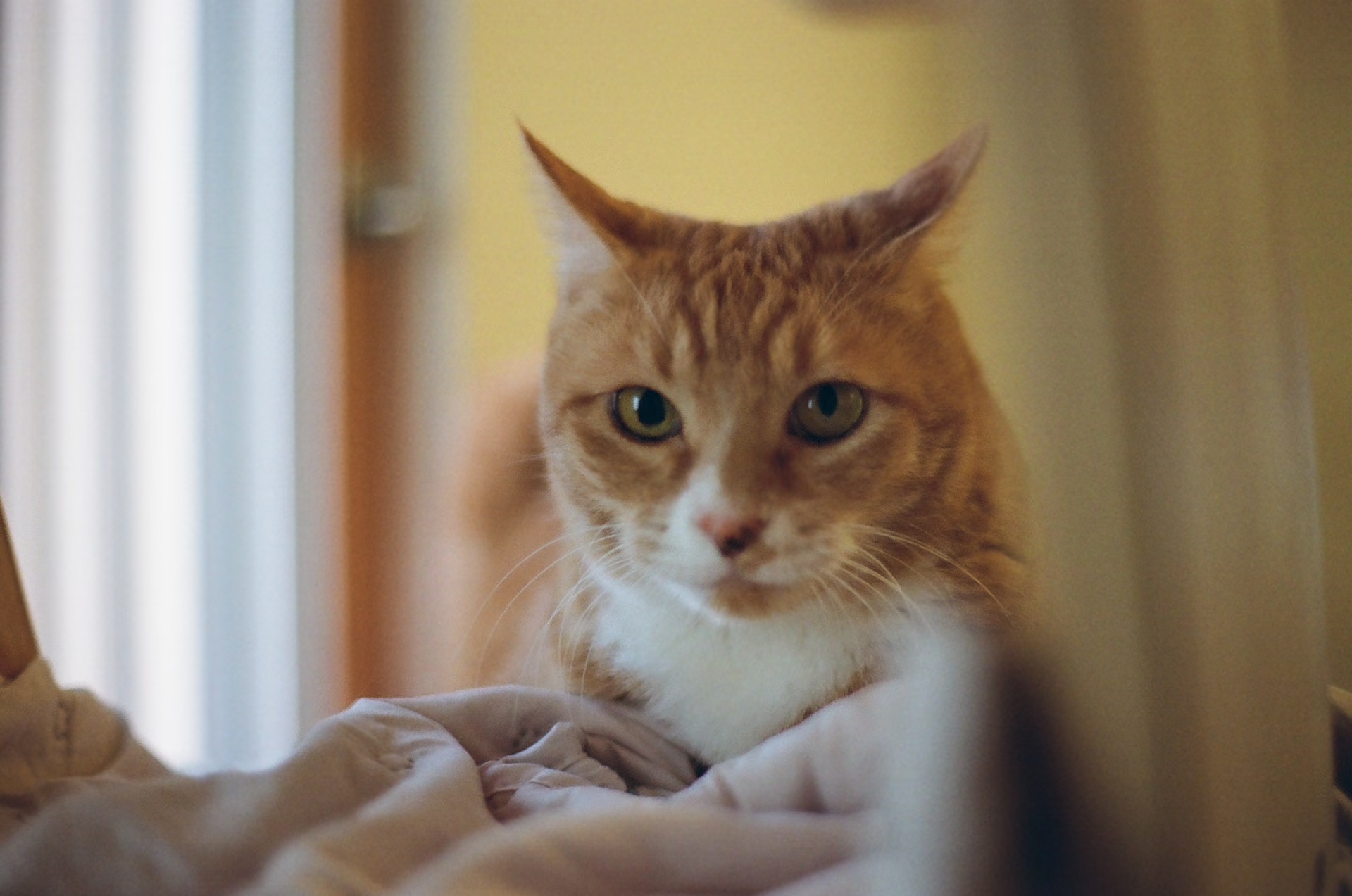
As I was leaving, another group was coming up from the ground floor. I hope places like this, keeping analog alive, go on for a long time.
On the way back to the subway, I spotted a taco place that kept turning up on Instagram and took a photo. So it was in Euljiro. Even at that hour it was busy. People seem to flock to the same few places more than ever these days. If you are going to spend time and money, you want somewhere well known and vetted online, somewhere that won't let you down even if you have to wait. Having chosen a repair shop from a single blog post, I understand the feeling. But the roll I had just picked up belonged to the other side of that. I had shot the whole thing without knowing what was on it, and sat down at the scanner hoping to salvage even one frame.
What used to take a few clicks, a MacBook opened and Lightroom launched, has become something that asks for time and care at every step. And yet I find I don't mind the inconvenience.